Bank of Canada raises lending rate up to 0.75 per cent from 0.5 per cent
By Kaitlynn Anderson
Farms.com
Agriculture will be able to manage the recent interest rate growth, as well as the one expected this fall, according to J.P. Gervais, chief agricultural economist at Farm Credit Canada.
The Bank of Canada increased the interest rate by a quarter of a percentage point earlier this week, up to 0.75 percent from 0.5 per cent.
This rate change is the first increase since September 2010, according to data collected by the Bank of Canada.
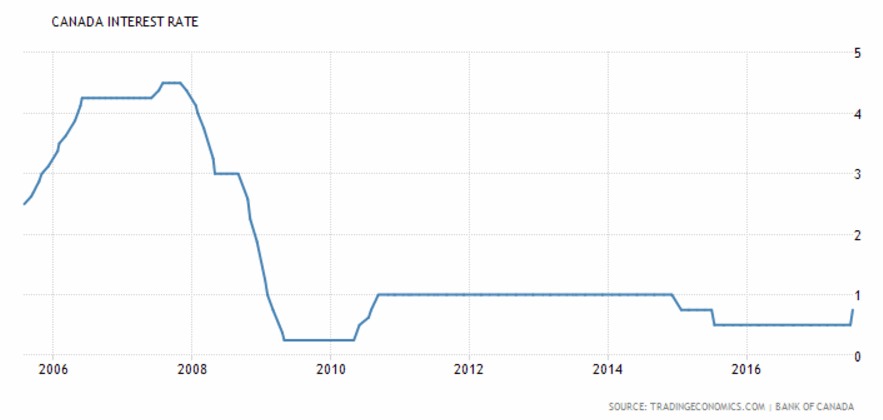
Source: Tradingeconomics.com
“This increase is not significant enough for most farmers and agribusiness operators to revise their business strategies, but I recommend they consider reviewing their long-term financing options with the expectation that this increase could be the beginning of a slow and gradual increase,” Gervais said in a release by FCC on Wednesday.
Producers are advised to review their personal risk tolerance when deciding between a fixed-rate or a variable-rate mortgage.
The chief economist remains optimistic, reminding Canadians that rising interest rates are an occurrence that an entire generation has yet to experience.
“Rates have been going down and have been low for many years. So, to them, this is something new that leaves them wondering,” Gervais said in an article released by FCC this morning.
For more information on why interest rates rise and the effects of the increase, watch the following video from the Financial Post.