By Jason Clark
Fallow syndrome received its name from the dry plains states where fields routinely benefited from the additional moisture available after a year where the ground was fallowed. Corn sometimes had symptoms of phosphorus deficiency when corn was grown on this previously fallowed ground, thus it received its current name, “fallow syndrome”. These phosphorus deficiency symptoms include small corn plants turning purple and being short, weak, and the stand having uneven growth (Figure 1). Phosphorus deficiency is also common in very cold, wet springs and when phosphorus levels are low in the soil. These weather and soil conditions may exacerbate the fallow syndrome problem.
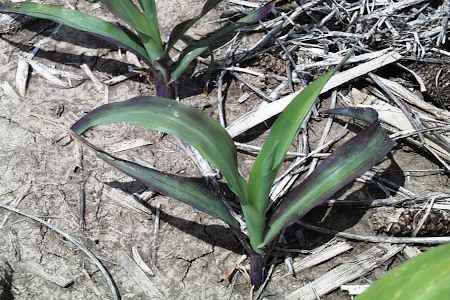
Figure 1. The purpling of corn leaves and stunted growth are typical symptoms associated with corn grown after fallow.
Corn, wheat, and other grass plants receive help taking up phosphorus and other nutrients from associations with beneficial mycorrhiza fungi. These fungi and their host plants form a beneficial relationship with each other. The corn plants provide the mycorrhiza fungi with sugars and the mycorrhiza fungi help the corn plants absorb nutrients such as phosphorus and zinc. These mycorrhiza fungi essentially become an extension of the corn root system. However, without live plant roots during a fallow year, these fungi are depleted over the season and into the following spring, which causes fallow syndrome. Many crops and weeds form beneficial relationships with mycorrhiza fungi. However, brassica crops and some other crops are not hosts for these fungi. Therefore, if you seeded cover crops or planted crops such as only forage radish, turnips, or sugarbeets on prevent plant acres this year, you will still likely see fallow syndrome symptoms on corn acres next season. Corn will grow out of fallow syndrome symptoms as its root system elongates and becomes larger. However, fields can remain pale and stunted, and some yield will likely be lost.
Things to Consider
- Fallow syndrome is less likely to occur when cover crops or weeds have been growing in the fields.
- Planting soybean instead of corn as soybean has shown to be less susceptible to fallow syndrome.
- No official research has shown what fertilizer rates and placements work to overcome fallow syndrome, but below are some suggestions.
- Banding phosphorus and chelated zinc in or near the row.
- Suggestions from Minnesota
- 40 lbs. P2O5 banded near the row is advisable, which is more than should be applied directly on the seed (University of Minnesota Extension).
- Once fallow syndrome occurs it is not likely that fertilizer applied will help correct the problem
- Broadcasting phosphorus will not likely help avoid or overcome fallow syndrome
- SDSU seed placed fertilizer guidelines are located in the fertilizer recommendation guide and best management practices for corn guidebook.
- A quick internet search can also get you some other opinions on rate and placement of phosphorus fertilizers to overcome potential fallow syndrome problems.
What to Do in the Future When Faced With Prevent Plant Situations
Source : sdstate.edu