By Paul Luna
4 THINGS TO CONSIDER BEFORE BUILDING YOUR PADDOCK
- Before installing a large paddock, train your cattle on the polywire line by setting up a small electric fence near a watering trough. Remember, polywire is only a psychological barrier.
- Look at the grade of the area where you are going to build your paddock. Grade will determine the kind and number of posts you use.
- In some cases, you may need to add a second polywire line below the main one, especially where stockers will rest and in low-lying areas where cattle could travel under a single line.
- Weight of stockers, number of head, stocking density and forage availability are the main determining factors when deciding the size of the paddock.
WORTH THE INVESTMENT
A geared fence reel can save time when stringing fence and reduce repetitive stress on your shoulder. You also can use it to run polywire off the back of your side-by-side for larger installations.
Purchase a larger solar charger than you think you’ll need.
A good fault finder is worth the extra expense.
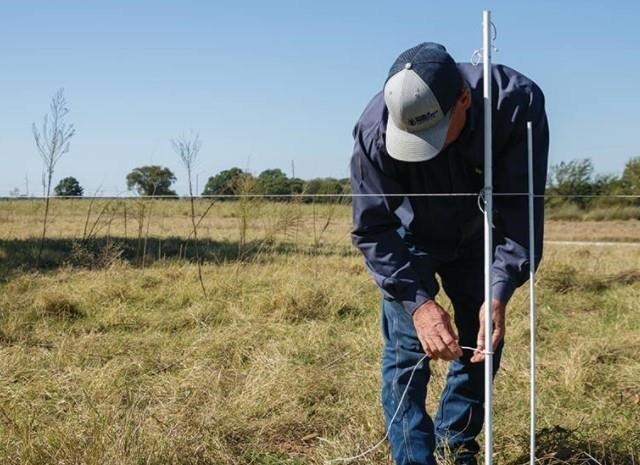
MATERIALS:
- Electric gate handle
- Fiberglass posts
- Drilled fiberglass corner posts for corners and ends of gates
- Double foot tread-in fence posts
- Metal T-post for charger (optional)
- Insulated wire
- Turbo wire or polywire
- Geared fence reel
- Grounding rod
- Solar charger with battery pack
- Fence charger alligator clips
- Fault finder
- Survey flagging tape
BUILDING THE PADDOCK:
- Connect a gate handle to the end of your polywire wound on a geared fence reel.
- Attach the gate handle to a permanent fence or t-post using an insulated wire at desired wire height for the paddock.
- Place a drilled fiberglass corner post on the other end of the gate.
- Wrap the polywire through drilled hole at the desired height for the wire and then around the top of the corner post.
- Drive another corner post into the ground at the next corner of the paddock, repeating the tie process.
Tip: Paul uses a polywire height of 36 inches for cows and 33 inches for stockers
Click here to see more...