By Emily Matzke
Sorghum, a common food item in regions of Africa and Asia, has one missing puzzle piece. The missing piece? Protein digestibility, which researchers in the Department of Agronomy at Kansas State University are trying to find.

“Sorghum is an important food crop grown in Africa,” said Tesfaye Tesso. “It grows well in their climate because it requires less moisture and nutrients than other crops.” Tesso is a researcher at Kansas State University.
The biggest flaw of sorghum is how difficult it is for people and animals to digest its protein. Once the problem is solved, sorghum will provide more nutrients to those who eat it. It will also increase the value of the crop for farmers.
With the goal of improving global hunger and food security, Tesso and his team began their research. While there are many aspects of the plant that may affect protein digestibility, the group narrowed their focus to the protein itself.
“Sorghum protein digestibility is affected by a lot of different pieces,” said Tesso. “We focused on the characteristics of sorghum protein that may be associated with digestibility.”
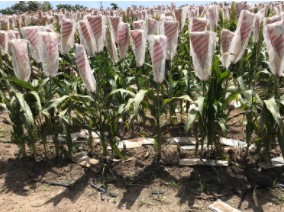
The research group selected 40 varieties of sorghum, including some with high digestibility and some with low digestibility. These varieties will help the team understand what genes are behind the difference in sorghum digestibility.
“Our goal was to look at the DNA that codes for all of the seed storage proteins, called kafirins,” said Tesso. Then researchers identified differences in these codes, which could be a cause for digestibility differences.
“Three out of the four kafirins we identified were linked to high protein digestibility, while the other one had lower digestibility,” said Tesso. “Identifying these factors is one important piece of a very complex puzzle.”
Moving forward, this research may lay foundation for enhancing protein digestibility through breeding. By understanding the genes associated with protein digestibility, scientists can watch for these genetic variations in sorghum plants, which will then have the desired traits.
Since protein digestibility is complex and affected by multiple factors, there is still more work to be done, according to Tesso. With their new ability to easily identify digestibility, researchers now have the power to select sorghum with other desired traits.
Click here to see more...