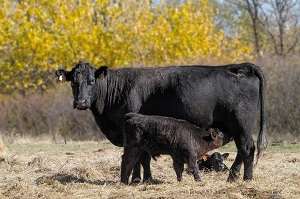
Dr. Glenn Selk, Oklahoma State University Emeritus Extension Animal Scientist, offers herd health advice as part of the weekly series known as the "Cow Calf Corner" published electronically by Dr. Peel and Dr. Glenn Selk. Today, Dr. Selk discusses the effects of late summer temperatures on the gestation of fall-calvers.
"Each year in August, it is time for an important reminder. Fall-calving season is here. In fact, the start of the fall calving season often begins before some producers expect it. The target date for the beginning of fall calving very often is September 1. Most printed gestation tables predict that calving will take place 283 days (some 285 days) after artificial insemination or natural breeding. Cows and heifers that gestate in hot weather will often calve a few days earlier than expected.
"Oklahoma State University physiologists studied early fall (August) and late fall (October) calving cows. Data from two successive years were combined for 60 Angus X Hereford crossbred cows. The “early” and “late” fall calving cows had been artificially inseminated in early November or early January, respectively. Semen from the same sire was used for all cows. All cows were exposed to a single cleanup bull for 35 days at 4 days after the AI season. The weather prior to calving was significantly different for late pregnancy in the two groups. The average maximum temperature the week before calving was 93 degrees F. for the “early” fall group. The average maximum temperature the week before parturition in the “late” calving group was 66 degrees F. There was a 100% survival rate for calves in both groups and both groups of cows had very high re-breeding rates (90% and 92%, respectively).
Click here to see more...