By Mike Ostlie
In 2022 a corn trial was successfully established at the Oakes Irrigation Research Site to evaluate six corn hybrids on their performance under different irrigation volumes. In this study, two non-drought tolerant (DT) hybrids were compared with four DT hybrids. The watering strategy was to irrigate at 0, 50, and 100% of corn demand. The study included three replicates of each treatment.
The 2022 season was very dry at Oakes with the site only receiving four inches of rain during the growing season. The location also has very deep and course sand textured soils. This created especially large differences in performance between the irrigation treatments. Supplemental irrigation occurred so that the 50% irrigation treatment received an additional 5” of water and the 100% irrigation received 10” of irrigation water, for a total of irrigation plus rainfed of 9” and 14” respectively. Figure 1 is an image of the corn under the different irrigation treatments in 2022.
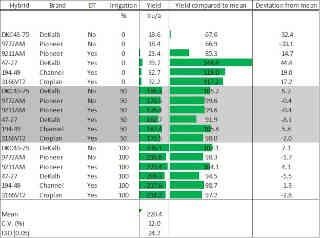
Figure 1. Corn grown at three irrigation levels at the Oakes Irrigation Research Site in 2022.
Average performance of the hybrids at the different irrigation regimes were as follows: 0% irrigation = 27.5 bu/a, 50% = 177 bu/a, and 100% = 220 bu/a. The performance at 0% irrigation is impressively poor, but the other two values are on par with expectations.
At first glance, there were no large differences in performance between the DT and non-DT hybrids (Table 1). At the medium and high irrigation levels the highest yielding treatment was random between the hybrids. This means that the drought tolerance trait created no real benefit at these water levels. We had hoped that the medium treatment might create some differences. This would potentially mean there could be cost savings by lowering the irrigation quantity required for a full corn crop. Since there were no treatment differences, we have to infer that cutting irrigation quantity is not a good strategy with the DT trait.
There were a few things to note with the 0% irrigation treatment. Again, at first there are no differences between hybrids from a raw yield perspective. But, when the yield of each hybrid was compared to the mean performance of the 0% irrigation treatment, we can see that the DT hybrids performed very well compared to the non-DT hybrids. This indicates that the trait may be providing a benefit to the DT hybrids. However, these differences are not going to make a difference in actuality. In some cases we doubled our yield with the DT trait but that only left us at 36 bu/a (compared to 18). With additional years of data or more commonly textured soils, the trait may show greater value to corn producers. But at this time, the value appears to be fairly minimal. We will not recommend against the trait, simply to temper expectations.
Source : ndsu.edu