By Evan Anderson
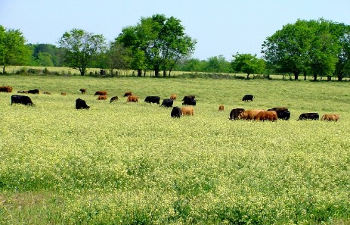
With the weather remaining relatively warm later in the season, winter weeds may be slow to get their start. Drought throughout much of the Panhandle has added to their sluggishness. That however, does not mean they’ve given up. Even if you haven’t noticed them in your pastures already, weeds like wild radish, thistle, and Florida betony will soon make an appearance. If they are left to grow unchecked, they can harm the health of the pasture and impact forage quality. Controlling weeds is a must.
These weeds love cooler temperatures and can get a foothold as the growth of pasture grasses slow. Maintaining a healthy through proper soil fertility and grazing management pasture can help prevent some weeds from becoming a problem. A thick dense stand of grass can out-compete most other plants and leaves very little bare ground for the establishment of weeds. Even with good pasture management it is still important to scout regularly and identify weed problems while they are small. Control weeds while they are young, as old and well-established weeds are more difficult to control and are more likely to have set seed.
Some of the common cool-season weeds in our area include:
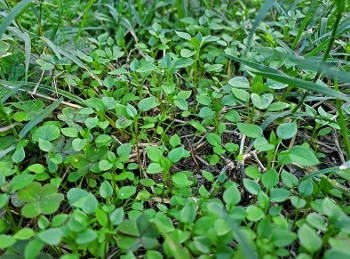
Chickweed
Grows prostrate, forming dense patches low to the ground. Healthy stands of grass can out-compete this weed, and preemergent herbicides can help control it. Metsulfuron, Cimmaron Plus, or Chaparral offer good control in Bermudagrass fields. However, these herbicides are not recommended for use in bahiagrass pastures due to crop injury. Scenarios like this remind us that you can’t simply look at the ratings charts for herbicides and pick a product. You have to carefully read the publications and product labels before using a product you are not familiar with. For bahiagrass, Weedmaster or Remedy are safe products with excellent control ratings.
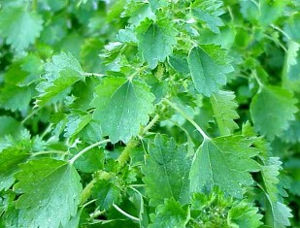
Fireweed
Also called heartleaf nettle, touch fireweed with a bare hand and you’ll quickly figure out where the name came from. Stinging hairs on the plant cause pain and irritation that can last for hours. Use GrazonNext HL, Remedy Ultra, or Pasturegard HL for control.
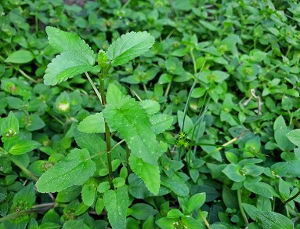
Florida Betony
Also called rattlesnake weed due to its ridged, rattlesnake rattle-shaped tubers. May be difficult to control if roots are not killed. Use GrazonNext HL or Weedmaster.
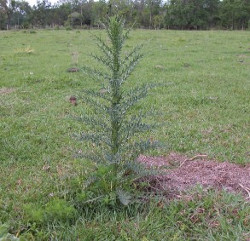
Thistle
A biennial, or a plant that reaches maturity after two years of growth. Much easier to control during their first year of growth; scout regularly and control them while they’re in the rosette stage, growing low to the ground. Can be controlled with GrazonNext HL, Pasturegard HL, Remedy Ultra, Weedmaster, Metsulfuron, or 2,4-D.
Wild Radish
Prevent infestations by sowing winter pastures with certified grass seed. Keep grass healthy to out-compete wild radish. Control using 2,4-D before plants reach 6 inches in height.
Source : ufl.edu