By Ashley Dean and Erin Hodgson
Seedcorn maggot larvae feed on germinating seeds or seedlings of corn and soybean (Photo 1). Feeding can delay development or kill the plant, and plant injury is especially prevalent during cool, wet springs when plants grow slowly. So far, this spring has been cooler and wetter than the past few years and this trend is expected to continue during the next couple of weeks. Despite planting progress being slow because of the weather, seedcorn maggot development has been on-track with previous years due to the few warm days we have had.
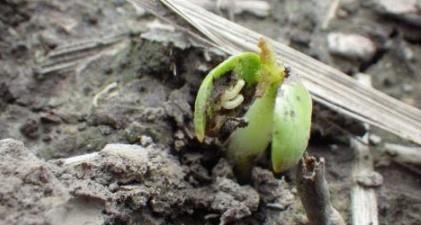
Photo 1. Seedcorn maggot on soybean
Seedcorn maggot has a lower developmental threshold of 39°F and an upper threshold of 84°F. Peak adult emergence for the first generation occurs at 360 accumulated degree days (GDD) since January 1. Based on current GDD, the first generation of adult seedcorn maggot has likely emerged throughout most of western and southern Iowa (Figure 1).
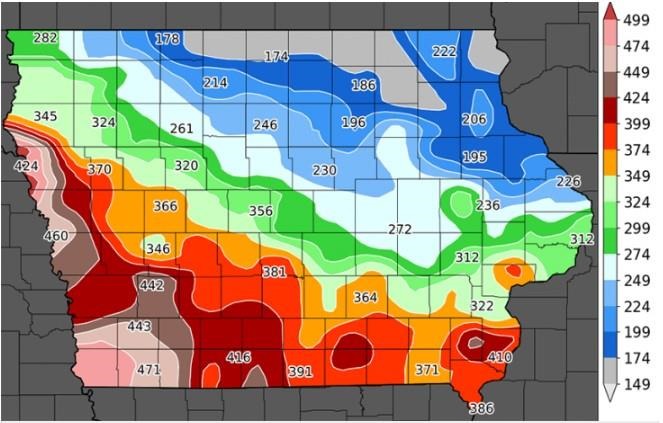
Figure 1. Accumulated growing degree days (base 39°F) in Iowa from January 1 to April 11, 2022. Map courtesy of the Iowa Environmental Mesonet, Iowa State University Department of Agronomy.
It is recommended to avoid planting during peak adult emergence, because first-generation larvae typically emerge within a few days (414 GDD) and feed for several weeks (781 GDD). Remember that forecasted cooler temperatures would delay development of both seeds and insects, potentially increasing risk to seeds planted in mid-April. If possible, target planting during the “fly-free” period in areas at higher risk for seedcorn maggot. While no rescue treatments are available, cultural and chemical methods prior to or at planting can minimize risks. Read more about seedcorn maggot biology, risk factors, and management in this encyclopedia article. To confirm seedcorn maggot injury, check areas with stand loss and look for maggots, pupae, and damaged seeds (hollowed out seeds or poorly developing seedlings).
Source : iastate.edu