By Jeannette E. Warnert
Communities in Southern California are watching their valued landscape palm trees suffer mortal damage from an invasive pest that is making its way northward from Mexico, reported Marty Graham in San Diego Reader. The South American palm weevil lays eggs in the palm tree's crown, where its grubs destroy tissue that holds the fronds.
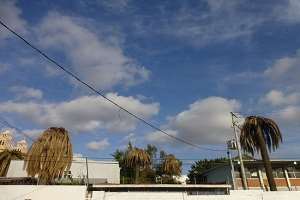
"The first sign of infestation is seeing the crown droop and turn brown," said Mark Hoddle, UC Cooperative Extension biological control specialist at UC Riverside. In time, the crown can fall off.
"The crowns weigh a couple of hundred pounds and, if they fall on something like a car or house, they can do considerable damage," Hoddle said.
For now, the pest appears to be focusing on Canary Island palms, but have been known to lay eggs in other ornamental palms and date palms.
"I hate to think of what could happen if they reach the palm oases in the Anza-Borrego Desert," Hoddle said of the treasured California native palms that grow in Southern California desert canyons.
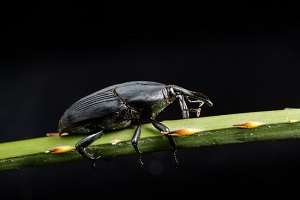
South American palm weevil is a relatively large pest capable of flying substantial distances.
"We've tested their flying capacity and our data suggests it can fly quite far," Hoddle said. "It's potential territory in California and the Southwest is enormous."
The only control measure at the moment is repeated treatment with pesticides.
"There are palm trees in the Mediterranean with PVC pipes up the side and a shower head at the top where a pump blasts pesticides every few months," he said. "There are also systemic pesticides you can put in the tree roots."
source: ucanr.edu