By Adam Varenhorst
Of all of the potential early season pests, the seedcorn maggot is rarely an issue in South Dakota. However, we have started receiving reports of soybean fields that have poor emergence or seedling stand reductions occurring. Although the culprit behind the injury (seedcorn maggot) is currently not active in the field, they are present as pupae. Some of the affected fields will likely be replanted, but they aren’t necessarily out of the window for seedcorn maggot activity. In South Dakota, 3 to 5 generations of seedcorn maggots may occur during the season. Therefore, it is possible that another generation of seedcorn maggots could impact replanted soybean fields.
So why are seedcorn maggots more of an issue in 2020? Most of the evidence is pointing towards the tough 2019 season where many fields were prevent plant. Due to excess moisture it was difficult to manage the weeds in many of the prevent plant fields, which resulted in large amounts of plant residue by the end of the 2019 season. Moving into the spring of 2020, some of the previously prevent plant fields had spring weed pressure, which although they were managed, resulted in additional plant residue in the field. Add in the moisture and periodic cool weather that we experienced so far this spring and we realize that we have had the perfect conditions for seedcorn maggots to develop within many fields.
Contrary to their name, seedcorn maggots will feed on the developing seeds of many different plants including soybean. It is well documented that seedcorn maggot densities are much higher in fields with high organic matter such as manure or green plant residue. Regardless of the residue situation, recently tilled fields are more attractive to the adult females of the seedcorn maggot and will be used for egg laying.
Identification
LARVAE
Seedcorn maggot larvae are small (1/4 of an inch long), legless and white or cream colored (Figure 1). Close inspection of a seedcorn maggot will also reveal that they have a black mouth with hook-like mouth parts that are used to feed on developing seeds.
PUPAE
The pupae of the seed corn maggots are brown to reddish-brown and resemble a wheat seed (Figure 1).
ADULT FLIES
The adult flies are approximately 1/20th of an inch in size and vary from gray to brown in color with red eyes.
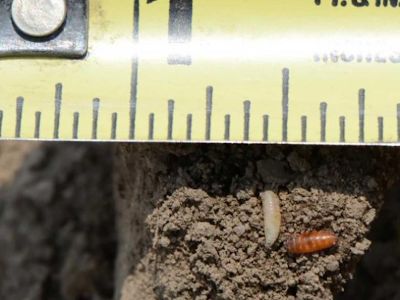
Figure 1. Seedcorn maggot larva and pupa.
Scouting
The best method of scouting for seedcorn maggot activity is to check fields for stand loss. Unlike many insect pests, seedcorn maggots often affect the entire field instead of just having hot-spots. In areas with stand loss, evaluate the plants and seeds for signs of feeding (Figure 2) or hollowed out seeds.
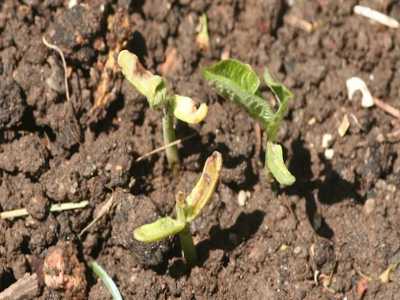
Figure 2. Seedcorn maggot injury on soybean seedlings.
Management
Unfortunately, there are no rescue treatments available for seedcorn maggots. Scouting for seedcorn maggot activity will not help the current stand of plants. However, scouting will inform management strategies if replanting is necessary. Insecticide seed treatments or applying in-furrow insecticides can reduce feeding in fields with a known seedcorn maggot population.
For insecticides labeled for seedcorn maggot in South Dakota, refer to the Corn Pest Management Guide.
Source : sdstate.edu