By Adriana Murillo-Williams and Paul D. Esker
Soybean cyst nematode (SCN, Heterodera glycines) is the pathogen that causes the greatest damage to soybean production in the United States. In Pennsylvania, the presence of SCN has been confirmed in the two counties with the largest area dedicated to soybean production: Lancaster and York. With that information in hand, the logical questions that come to mind are:
How do I know if SCN is my fields?
There are two ways to find out if SCN is in your field. The first is digging out soybean roots this time of year and looking for SCN females attached to the roots (Figure 1). Remember that your crop may look healthy and still have SCN. Symptomless infection is dangerous because it allows the pathogen to go unnoticed until populations are high and difficult to manage. One way to check is by digging out random plants across the field or around areas where plants look yellow and stunted (Figure 2).
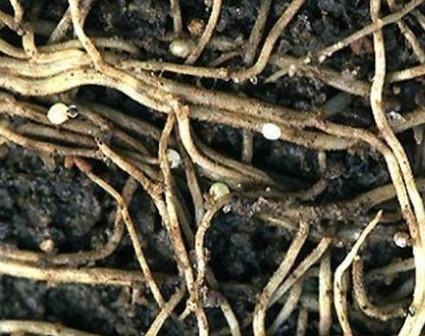
Figure 1. Soybean cyst nematode females on soybean roots. Photo credit: Jonathan D. Eisenback, Virginia Polytechnic Institute and State University, Bugwood.org
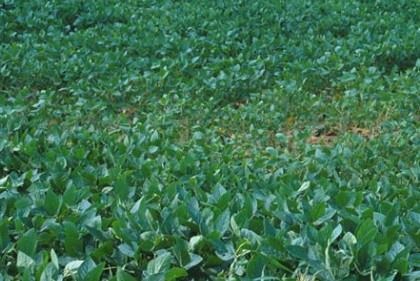
Figure 2. Symptoms of soybean cyst nematode. Photo credit: Paul Bachi, University of Kentucky Research and Education Center, Bugwood.org
Can't see anything?
The second way to check for SCN is by taking a soil sample and sending it to a nematology lab. Currently, Penn State Extension is offering free SCN testing for farmers in Pennsylvania. Contact Adriana Murillo-Williams (axm1119@psu.edu text 814-360-5517, call 814-355-4897), Paul Esker (pde6@psu.edu), Alyssa Collins (acc18@psu.edu), or your local Agronomy Extension Educator for information about the program.
How do we keep SCN from spreading to other areas?
First, you must scout your fields. Second, ensure that ag machinery and ag implements are properly cleaned after use or before moving from field to field. Soybean cyst nematode only moves long distances with anything that will move soil and infected plant parts.
To protect Pennsylvania soybean production, we must be proactive and join efforts to limit SCN spread by scouting our fields. It takes a village to keep SCN in check. Help us beat the pest.
Source : psu.edu