Farmers produced 769 million tonnes of milk worldwide in 2013
By Diego Flammini
Assistant Editor, North American Content
Farms.com
The month of June is widely recognized as Dairy Month and June 1 is celebrated as World Milk Day.
The Food and Agriculture Organization (FAO) of the United Nations promotes the day, which boosts milk’s reputation as a global food.
By March of 2017, Canadian dairy farmers produced about 756,551 kilolitres of milk, according to Stats Canada.
“World Milk Day is a great time to invite everyone to take a moment and enjoy a glass of milk. We also want to celebrate the dairy industry here in Canada, which is growing and thriving,” Wally Smith, president of Dairy Farmers of Canada, said in a June 1 release.
“Our unique system of supply management allows us to produce nutritious, wholesome milk for Canadians in a sustainable way and is the best system in the world. We are grateful for the support that Canadians continue to show our farmers and, on behalf of Canadian dairy farmers, I want to say thank you.”
By the middle of May, dairy farmers in the United States produced 17.2 billion pounds of milk, according to the USDA.
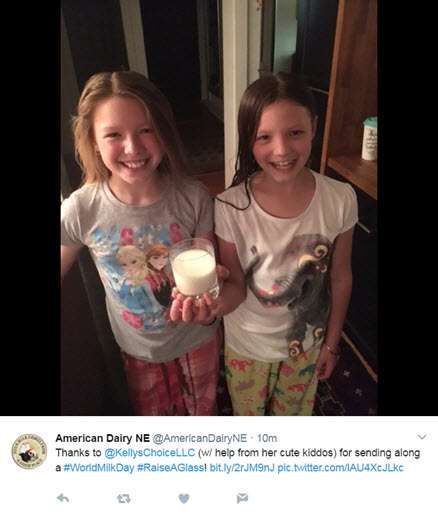
“It’s easy to forget that milk is the original farm to table product because so many of us grew up knowing it would be on our kitchen tables every day,” Rachel Kyllo, senior vice president of Kemps, a Minnesota-based dairy processor, said in a statement. “We’re encouraging milk drinkers everywhere to raise a glass today and share it on social media as a way to thank the farmers for the work they do every day.”
Milk production has increased significantly, according to the FAO.
Globally, dairy farmers produced 500 million tonnes of milk in 1983. In 2013, that number was up to 769 million tonnes.
The top milk-producing countries in the world are India, the United States, China, Pakistan and Brazil.
India produced 146.3 million tonnes of milk in 2016, accounting for 18.5 per cent of world production, according to a February 2016 Government of India release.
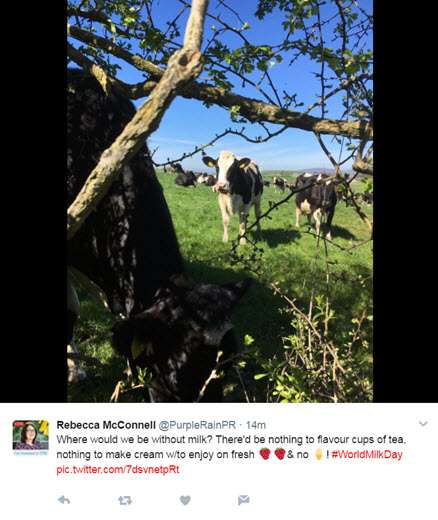
Use the hashtag #WorldMilkDay or follow @WorldMilkDay on Twitter to follow the celebrations on social media.