Scientists discovered the pathogen in a potato psyllid
By Diego Flammini
News Reporter
Farms.com
Canadian researchers have discovered a pathogen in Alberta that could be problematic for potato growers.
After four years of research, Dr. Dan Johnson, a professor of environmental science with the University of Lethbridge, and Dr. Larry Kawchuk, a research scientist with Agriculture and Agri-Food Canada, found the zebra chip pathogen in a potato psyllid, a crop pest.
Their discovery marks the first time the zebra chip pathogen has been confirmed in Canada.
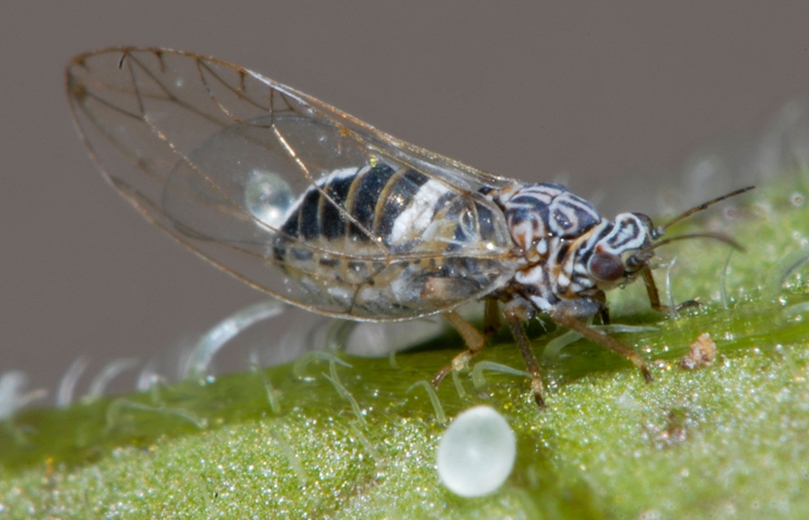
Potato psyllid
Photo: PotatoPro.com
The psyllid, which can carry the pathogen, can also be found in Saskatchewan and Manitoba, according to Johnson.
And despite the low number of psyllids with the zebra chip pathogen, farmers need to be aware that the pathogen is now in the country.
“This can absolutely be an issue for farmers,” Johnson told Farms.com today. “The pathogen mainly requires monitoring at the moment because our rate is very low. But it’s the very first occurrence and that can’t be overlooked.”
The zebra chip pathogen can cause serious yield reductions and quality issues. Potatoes infected with zebra chip can develop unsightly dark lines when fried, making the effected potatoes unsellable.
The discovery also means the pathogen continues to move north.
The zebra chip pathogen was first discovered in Mexico in the late 1990s, according to the American Phytopathological Society.
Since then, the pathogen traveled into the United States. In 2014, farmers in Texas and Nebraska spent an average of US$704 and US$563 per hectare, respectively, to manage the pathogen, according to the USDA’s Agricultural Research Service.
“The pathogen has been in Idaho for several years too, but so far Canada has only had the potato psyllid,” Johnson said. “But they were all basically testing negative for the pathogen until now.”
Top photo: Evidence of zebra chip in potatoes
Photo: American Phytopathological Society