Report was issued September 7
By Diego Flammini
Assistant Editor, North American Content
Farms.com
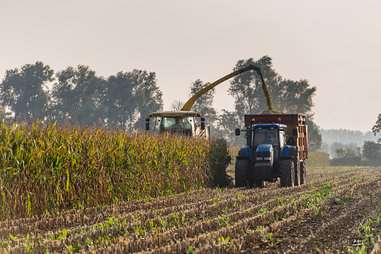
OMAFRA’s Field Crop Team released its latest Field Crop Report, with a focus on corn silage harvest. The report highlights the need to carefully examine plant moisture before beginning harvest.
“Proper whole plant moisture is critical to good packing and fermentation,” the report says. “Silage that is too wet may not ferment properly and undergo clostridia fermentation, make poor quality feed and may result in excessive seepage.”
On the other hand, the Field Crop Team warns silage that’s too try comes with its own list of issues.
“(It) may not pack sufficiently for oxygen exclusion for fermentation and result in heating or mould development.”
Some growers use milk line as a harvest guide for whole plant moisture.
The milk line separates the hard starch forming at the dent end of the kernel from the soft dough towards the base end of the kernel.
But the Field Crop Team says using milk line isn’t always accurate.
“It is not necessarily a great predictor of whole plant moisture,” the team says. “Harvest has traditionally been recommended for ½ to 2/3 milk line progression, but whole plant moisture may be significantly wetter or drier than optimal depending on the situation.”
The Field Crop Team says, however, themilk line could be used as an indicator of when to start measuring whole plant moisture.
“This would reduce the risk of starting harvest when whole plant moisture has already become too dry for storage,” the team says.