By Olivia Amundson
For most, weaning is in the books and pregnancy detection is complete or soon to be underway. Now is the time to pay attention to those pregnant cows out on crop residue or grass. While these females may be the last thing on your mind, this time is critical for her success the following year.
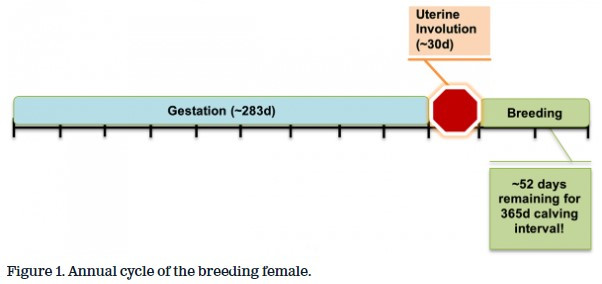
Annual Cow Cycle
Cow calf operations are more profitable when cows maintain a 365-day calving interval. This leaves approximately 83 days for that female to be re-bred following calving. However, that female has to go through a process known as, “uterine involution” following calving. This is where her uterus shrinks back to appropriate size for subsequent breeding. As a result, of uterine involution, approximately 52 days remain to for this female conceive and maintain a 365-day calving interval. Figure 1 gives a timeline representation of the breeding female.
Weaning and Cow Condition
How can we ensure that our females will breed back in adequate time? The most significant area to evaluate is cow condition at time of weaning. Cows nursing calves for periods longer or shorter than traditional can decrease or increase body condition score influencing the success of the subsequent breeding season.
Body condition score is a measure of energy reserves in beef cows. It is based off a 9-point scale with 1 being emaciated and 9 being obese. In a traditional weaning scenario, cows are in the middle third of their gestation and a period of time that is easiest to improve body condition score. Ideal body condition for a cow prior to calving is 5-6. In first-calf heifers body condition should be no less than 6 due to the stresses of calving, lactating for the first time, and the fact she is still growing. Therefore, take this time to spend with the cows and if possible, sort cows based off body condition score. This will allow optimization of production and cost.
Injuries and Diseases Pre-Calving
The ultimate goal for cow/calf producers is to have a weaned calf to sell at the end of the year. Some problems to be aware of prior to calving are vaginal/rectal prolapse and ketosis/pregnancy toxemia. Understanding causes, prevention, and treatment can be a proactive approach to managing the calving season.
VAGINAL/RECTAL PROLAPSE
As a cow begins her last third of gestation, the tissue around the birth canal becomes relaxed. A growing fetus increases pressure in the abdominal cavity and can push the vagina or rectum out. An epidural anesthetic can help in the process of placing the structures back in place. To help avoid prolapses, avoid over conditioning cows during late gestation. Cows who prolapse prior to calving should leave the herd, as they will produce greater problems in the end. If these animals are kept, remember to remove sutures prior to calving.
KETOSIS/PREGNANCY TOXEMIA
In the last two months of pregnancy, cows exposed to a low level of nutrition, cows overly fat, or those carrying twins are at a higher risk of developing ketosis/pregnancy toxemia. Pay attention to cows who stop eating, become depressed and segregate from the rest of the herd, develop an odor of acetone on their breath, or develop muscle tremors. Consult a veterinarian for treatment options and ensure cattle are receiving adequate nutrition prior to calving.
Facilities
Begin checking facilities prior to snow fall and freezing temperatures. Ensure there will be adequate bedding at time of calving and calving supplies are replenished and usable.
Conclusion
It is the perfect time to begin thinking about the upcoming calving season and reproductive success of the herd. This year consider incorporating calving data into the SDSU Extension Calving Distribution Calculator to determine where the herd needs to be to be economically sound. For more information regarding calving distribution and management strategies moving toward a defined calving season attend the webinar series titled, “BeefUP” occurring throughout the month of January.
Source : sdstate.edu