By Kendall Crawford
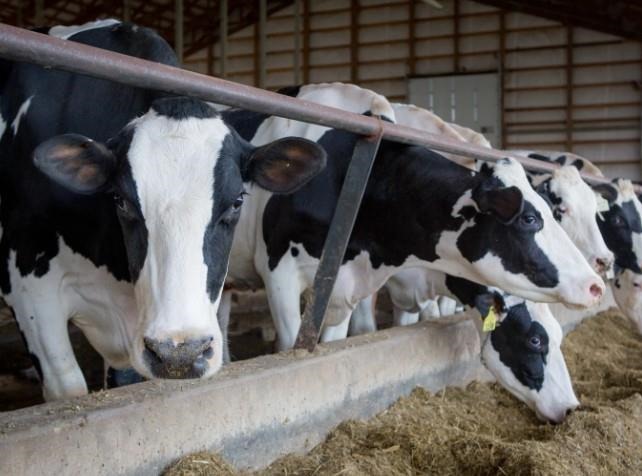
The project will transform cow manure into a renewable energy source for the town of Sioux Center
Sioux Center is looking to local dairy farmers to help supplement the town’s natural gas supply.
The northwest Iowa town will construct a pipeline from surrounding dairy farms to bring in renewable energy from a new source: cow manure.
The manure from three different dairy farms will be put into digesters, which break down the waste and create natural gas. Once scrubbed and monitored, the gas will then be pumped directly to the town’s distribution system and sold to Sioux Center.
Utilities assistant manager Adam Fedders said it will be a great help to the community, which is in need of more capacity.
“For a growing community, like Sioux Center, taking advantage of opportunities to receive additional capacity and other locations is something that's advantageous,” Fedders said. “And then to find an opportunity right in your backyard is even greater.”
Fedders estimates the local ag businesses —Maassen Dairy, Hoogland Dairy and Brian Roorda Dairy — will bring in around 350 MMBtus a day to the town. He said that's around a third of the natural gas typically used in Sioux Center on a summer day.
Aaron Massen, a fifth generation farmer who owns Maassen Dairy, said the new infrastructure will not only expand the community's capacity for natural gas, it will also bring environmental benefits.
By capturing and harvesting the methane released by cow manure, he said the project will help reduce the community’s carbon footprint.
“We’re capturing value out of it that would have been lost as a greenhouse gas,” Maassen said. “So, it allows us to capture that without changing the value of the resource that we have for our own operation, and add value to just our local community.”
The estimated greenhouse gas emissions eliminated will be equivalent to around 8,800 cars, Maassen said.
The businesses are partnering with Novilla RNG, a renewable natural gas infrastructure company that has led similar manure-based energy projects in Wisconsin and Michigan.
The company will be covering the estimated cost of $5.2 million to construct an 8-mile natural gas line that would connect to the city’s distribution system.
Click here to see more...