Farms.com Home   News

Soybeans Can Be Aerial-seeded With Cereal Rye To Protect Your Soils

The benefits of including cover crops in crop rotations have been widely documented and include recycling nutrients, reducing erosion, improving soil structure, increasing soil organic matter, supporting soil organisms and suppressing weeds, nematodes and pathogens. Farmer interest has increased recently in cover crop choices and application in cropping systems.

In corn and soybean production, farmers have voiced concerns about reliably establishing cover crops after harvest due to harvest demands and uncertain harvest dates. Aerial seeding of cover crops into standing soybeans prior to harvest is a viable alternative that can address these issues by incorporating cover crops prior to harvest. Aerial seeding of cover crops by farmers and aerial applicators has been limited in Michigan, while dramatically increasing in Ohio and Indiana.

In 2012, a study was initiated to evaluate the influence of aerial seeding date and cover crop species on the establishment and performance of cover crops and mixes in soybean systems. Cereal rye was aerial applied to two soybean fields in Clinton County. Soybeans were aerial seeded with rye on Aug. 8, Aug. 18 and Sept. 13, 2012, at a rate of 108 pounds per acre.

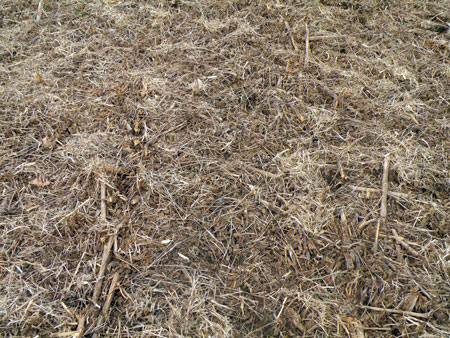
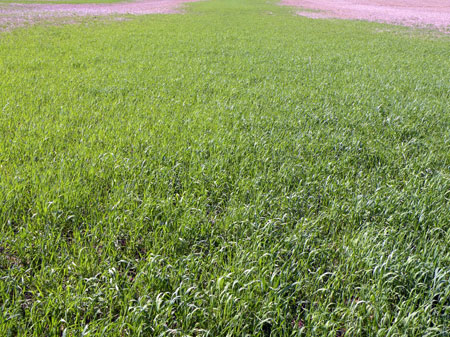
Last fall, Michigan State University Extension sampled the soybean fields and found very little cover (Photo 1). However, Photo 2 shows what the cover looked like on Tuesday, May 7, 2013. The cereal rye established extremely well; even though it appeared nothing was growing last fall, a very nice stand is growing this spring.
''

''

Photos 1 and 2. (Left) Soybean field aerial-seeded to cereal rye. Taken Nov. 14, 2012.(Right) Same field this spring, cereal rye picture taken May 7, 2013. Photo credits: Dean Baas, MSU

This project demonstrates that soybean farmers can successfully aerial-seed cereal rye into soybeans.

Source : msu.edu


Trending Video

Spring 2026 weather outlook for Wisconsin; What an early-arriving El Niño could mean

Video: Spring 2026 weather outlook for Wisconsin; What an early-arriving El Niño could mean

Northeast Wisconsin is a small corner of the world, but our weather is still affected by what happens across the globe.

That includes in the equatorial Pacific, where changes between El Niño and La Niña play a role in the weather here -- and boy, have there been some abrupt changes as of late.

El Niño and La Niña are the two phases of what is collectively known as the El Niño Southern Oscillation, or ENSO for short. These are the swings back and forth from unusually warm to unusually cold sea surface temperatures in the Pacific Ocean along the equator.

Since this past September, we have been in a weak La Niña, which means water temperatures near the Eastern Pacific equator have been cooler than usual. That's where we're at right now.

Even last fall, the long-term outlook suggested a return to neutral conditions by spring and potentially El Niño conditions by summer.

But there are some signs this may be happening faster than usual, which could accelerate the onset of El Niño.

Over the last few weeks, unusually strong bursts of westerly winds farther west in the Pacific -- where sea surface temperatures are warmer than average -- have been observed. There is a chance that this could accelerate the warming of those eastern Pacific waters and potentially push us into El Niño sooner than usual.

If we do enter El Nino by spring -- which we'll define as the period of March, April and May -- there are some long-term correlations with our weather here in Northeast Wisconsin.

Looking at a map of anomalously warm weather, most of the upper Great Lakes doesn't show a strong correlation, but in general, the northern tiers of the United States do tend to lean to that direction.

The stronger correlation is with precipitation. El Niño conditions in spring have historically come with a higher risk of very dry weather over that time frame, so this will definitely be a transition we'll have to watch closely as we move out of winter.