Based on the way Movento moves in the grapevine and field observations, we are approaching the optimum timing for a Movento application for controlling mealybugs.
Movento moves where the sugars from the leaves are moving. Before bloom, most of the sugar is moving into the shoot tip and the flower cluster. After bloom, the sugars also move through the trunk to the roots. Applying Movento too early means there won’t be as much product available to get into the trunk where most of the mealybugs are feeding when the most susceptible stage (1st instar) is present.
We have been monitoring the development of mealybugs in several vineyards in Niagara and the population development is following the same pattern that we’ve observed in the past. Adult development peaks around bloom and first instars, or crawlers, are observed as the eggs hatch around pea-size berry. The crawlers are the most mobile stage of development and are also the most efficient at transmitting grape leafroll virus (GLRaV-3). The timing for Movento that has worked well in field trials is post bloom. The higher rate of 460 mL/ha seems to be the most effective. If necessary, a second application can be made 30 days later if you continue to see mealybug development.
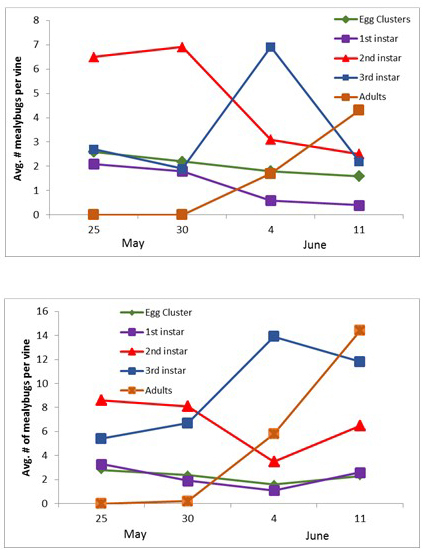
The graphs below show the development of mealybugs under the bark at 2 vineyards in Niagara. At each date the number of mealybugs at each stage was counted for 4 minutes on each of 10 vines.
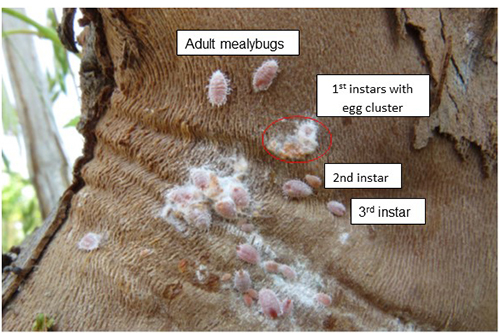
The image below shows the different stages of development of mealybugs.
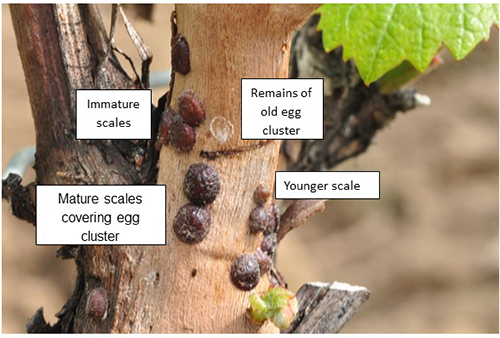
Scales can also transmit GLRV-3. The image below shows Fruit lecanium scale at different stages of development
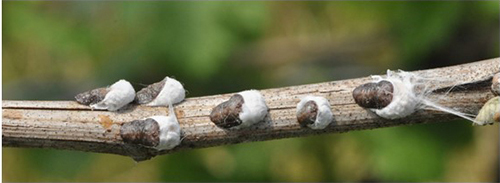
Cottony maple scale (image below) can also transmit GLRaV-3. The white cottony material under the dark scale contains the eggs.
As for all pesticides, it is critical to minimize the exposure of bees to Movento. Spray in the evening when bees are not active. Mow cover crops to remove flowers a couple days before you intend to spray. And most importantly, do everything possible to minimize drift of sprays out of the vineyard or onto row middles.