The Association of Equipment Manufacturers held a Celebration of Modern Agriculture on March 21 and 22
By Diego Flammini
Staff Writer
Farms.com
Visitors of the National Mall in Washington D.C., on March 21 and 22 were greeted by some of today’s modern agricultural equipment.
After multiple attempts, the Association of Equipment Manufacturers (AEM) held its inaugural Celebration of Modern Agriculture outside USDA headquarters between the Smithsonian museums.
“We originally planned to do this in March 2020,” Curt Blades, senior vice president of AEM, told Farms.com. “The pandemic caused us to delay everything.”
Over the two-day event, more than 16,000 members of the public, Congress and staffers stopped by the equipment displays to discuss agriculture.
Members of Congress engaged in policy discussions while AEM reps used the event to educate members of the public who may not be as familiar with agriculture.
“We knew going in that we’d run into people who hadn’t seen a modern tractor before,” Blades said. “We wanted to have a positive experience and we took the time to answer every question we could.”
Multiple equipment manufacturers were on hand with pieces of equipment and representatives to engage with the public.
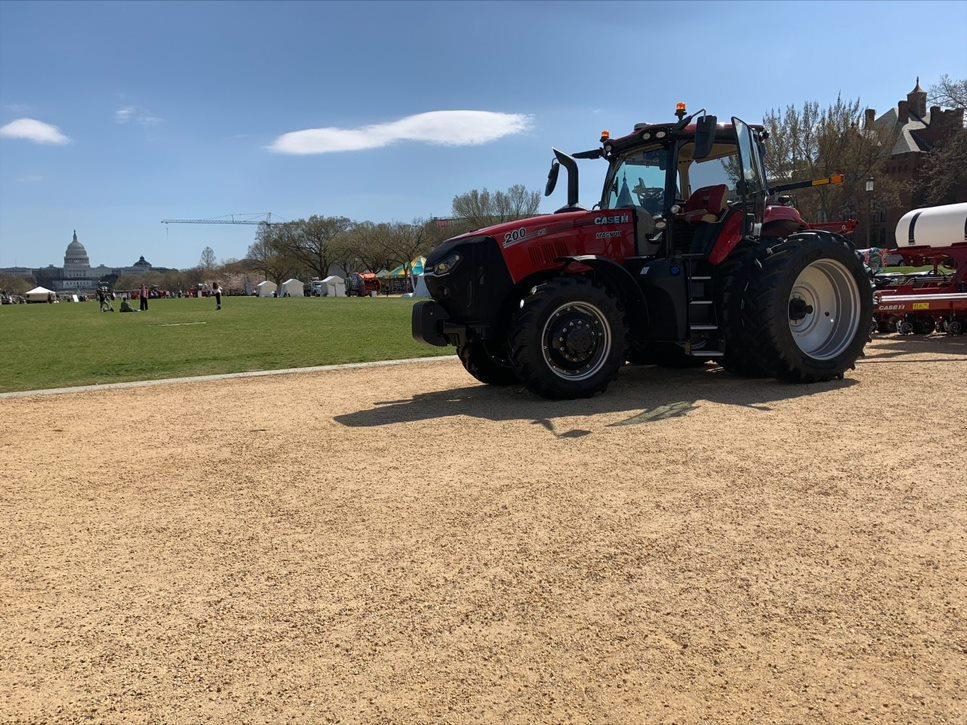
Representatives from Case IH, for example, attended the celebration.
The visual of the farm equipment lined up on the National Mall is an image people involved won’t soon forget, said Matt Booms, a Case IH product specialist.
“It was awesome,” he told Farms.com. “Our tractor was parked next to the Smithsonian Institute.”
The event also acted as a collaborative effort between manufacturers.
Usually at trade shows, the equipment manufacturers are competing against one another.
But for those two days at the National Mall, everyone worked together, Booms said.
“Oftentimes with the different colors of paint, we’re trying to outsell one another,” he said. “This wasn’t the case here. I was able to talk (to people) about what our tractors do, then point across to our friends who make different pieces of equipment and not only discuss how they work together, but also provide an introduction point should they want to continue the discussions further.
And some of those discussions included highlighting how technology and agriculture intersect.
Some visitors saw sprayers and automatically had a negative opinion about those machines.
Taking the time to properly explain what the equipment does will help give people a better understanding of how farmers produce food, Booms said.
“We engaged them and discussed how we’re doing the right thing for the plant, for the seed and by no means are we doing in excess,” he said. “We need to respect the environment because ultimately it’s the environment that gives us our crops.”
Representatives from AGCO also attended the two-day event.
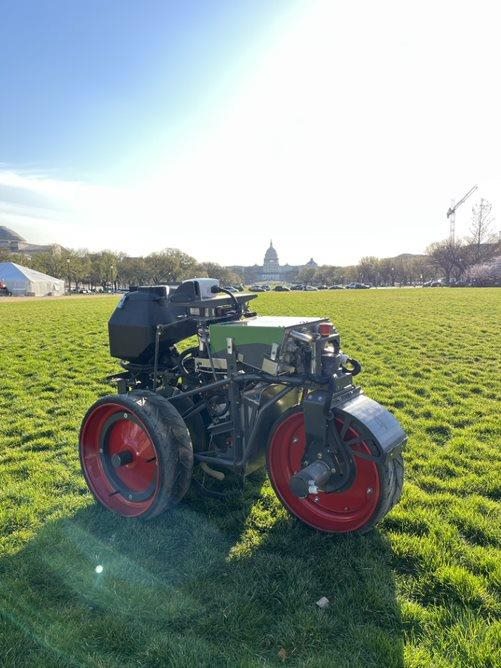
“It’s the most fun I’ve had at an event in the past several years,” Bob Blakely, manager of public relations and channel communications with AGCO. “Many people weren’t aware of how sophisticated modern ag equipment is, so to give them a small taste of that and show them how all of this equipment produces their food, fuel and fiber, it truly was a great experience.”