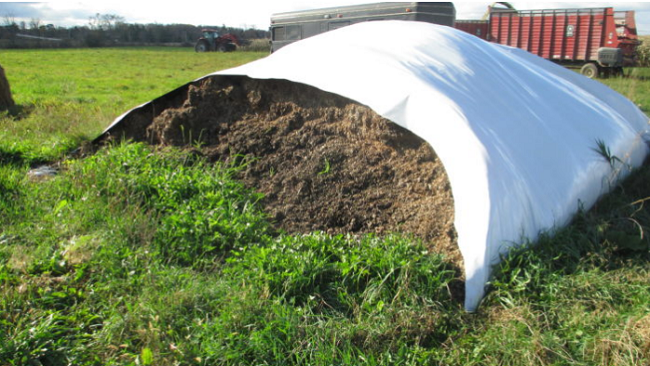
In properly ensiled corn silage, research has not shown an increase in mycotoxins from levels in the crop at harvest. Fusarium species, the fungi that produce DON, do not like low oxygen, low pH environments, so if corn goes through the proper ensiling process fusarium should no longer be active and able to produce DON. It takes at least three weeks for corn silage to fully ferment.
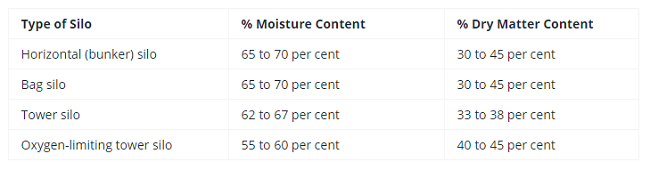
Ensiling corn at the correct moisture content, with proper packing density, and in a correctly sealed silo all contribute to creating the low oxygen, low pH environment that inhibit mycotoxin production. If the crop is too dry it is difficult to pack, reducing the amount of air that can be excluded. Inefficient fermentation caused by incorrect moisture levels results in silage pH not dropping far or fast enough to prevent spoilage. The correct moisture content varies with the type of silo being used (see Table 1). Tower silos rely on gravity to pack the silage. For bunker and bag silos, operators must match the rate of silo fill with appropriate packing time and force to exclude air properly. Bunker silos should be packed to a density of at least 240 g dry matter/L (15 lbs DM/ft3). On an as-fed basis, a litre of packed silage should weigh 640 – 800 grams (40-50 lbs/ft3) or more. In addition, the silo has to be sealed correctly to keep air out. Oxygen in silage containing fusarium species can enable the fungi to continue DON production.
Table 1. Correct moisture content for silage crops.
Research has shown DON levels in corn silage stay the same or decline over time. Where levels decline, it is hypothesized there may be some type of microbial degradation or transformation, though this process is not well understood. Other research has shown that corn ensiled at high moisture content can decline in DON content while corn ensiled at lower moisture content does not. Because DON is water soluble, researchers suggest DON is “washed out” with seepage from wet silage.
If corn is not properly ensiled, particularly if it fails to become anaerobic for anaerobic bacteria to drop pH, then aerobic fungi like fusarium are not inhibited and they may continue to grow and potentially produce DON. This may apply to improperly stored silage, areas of storage that are difficult to pack, or areas exposed to oxygen.
Mycotoxins in feed can reduce intakes, which affect production in dairy and meat animals. Research suggests that consuming mycotoxins can also negatively impact the immune system, which puts livestock already at higher risk for health problems – such as young stock and high-producing animals – at even greater risk. DON is not the only mycotoxin that can cause animal health challenges. Because testing for DON is fairly routine, it is used as an indicator of whether mycotoxins are likely to be a concern. Producers should talk with their feed advisor or veterinarian about mycotoxin testing their silage after fermentation is complete and before feeding it. That way they can determine if additional management is needed when they feed the silage.
Table 2. Mycotoxin guidelines in total rations, on a dry matter basis
Click here to see more...