By Ethan Carter
Figure 1. Boron deficient Tifguard, more than 100 days after planting. Field composed of well drained sand in Jackson County. Confirmed by soil and tissue tests.
Now that it’s early June, peanut fields across the Panhandle range in age from freshly planted to nearly 40 days after planting. Within the past two weeks, many areas have had consistent rainfall and overcast days. The recent weather has left fields saturated, complicating late plantings and spray applications. It also presents the opportunity to discuss potential issues associated with a nutrient that leaches like boron.
Boron is highly mobile and can rapidly leach from the root zone. Along with manganese, it is one of the most commonly deficient micronutrients on sandy soils. When tissue testing is done to evaluate boron levels, the entire above-ground portion of plants are collected. The desired range is 20-60 ppm, with less than 20 ppm being a critical level for deficiency and 100 ppm or more being a critical level for toxicity. Deficiency can occur when little or no boron is applied with the crop fertilizer. In our region, typically well to excessively-drained sands are most susceptible to boron deficiency. In peanut, boron deficiency is associated with hollow-heart, which lowers grade. This condition presents itself as discoloration within the kernel. However, severe boron deficiency can present itself in a manner similar to zinc toxicity- with split stems and roots, compacted branch terminals, and few developing pods (Figures 1, 2, and 3).
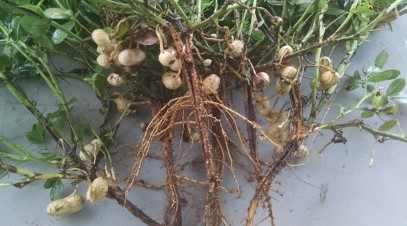
Figure 2. Split stems and roots on Tifguard plants suffering from boron deficiency in Jackson County. Confirmed by soil and tissue tests.
Figure 3. Split branches in Tifguard suffering from boron deficiency in Jackson County. Confirmed by soil and tissue tests.
When these types of symptoms are found, a tissue and soil test are important to determine if the field has issues with either boron or zinc. Boron can be added in with the initial crop fertilizer, or applied with early herbicide and fungicide applications. Foliar applications of 0.5 lb/ac elemental boron can be made during mid-bloom to correct boron deficiency.