Diseases: Clubroot symptoms in canola have been reported. Sclerotinia apothecia were observed in the MacGregor area. Root rots continue to be reported in pulse crops, including soybeans and field peas. A suspected case of wheat streak mosaic virus has been reported from the RM of Macdonald. Early symptoms of sunflower rust were observed near Cypress River.
Insects: Some field edges and a few fields have had grasshopper populations controlled. Some field edges are being watched for grasshopper levels and whether there is much feeding to crops. Aphid levels in peas and cereal crops are still quite low. No soybean aphids have been reported yet.
BeeConnected: Protecting Pollinators and Crops
If pest insects appear to be at economic levels in a crop that is flowering, extra considerations are neccesary. Honey bees and pollinators are likely to be active in any flowering crop. Communication between farmers, agronomists and beekeepers can help minimize harm to bees.
An app called BeeConnected (http://www.beeconnected.ca/) can help prevent insecticide harm to honey bees. After registering as a user, farmers can register the location of their property. If a beekeeper registers the location of their beehives within 5km of a farmer’s property, both parties will be notified and will be able to discuss their activities further using the secure messaging service. If they wish, farmers may also register the time and specific location of crop protection activities they are planning, such as the spray application of pesticides.
When crops are flowering it is even more critical to use eceonomic thresholds when available. Some crops such as canola and sunflowers can produce good yields without pollinators, but will produce better yields with pollinators. So applying an insecticide when insect pest levels are below economic thresholds may inadvertently decrease both yield and profit by reducing or elimating the increase to yield that pollinators contribute. This is one of the reasons we highly discourage tank mixing in an insecticide when applying other pesticides to a flowering crop "just in case harmful insects are present". This is where good crop scouting can save you a lot of money by making sure you maximize the benefits from pollinators and other beneficial insects.
Clubroot
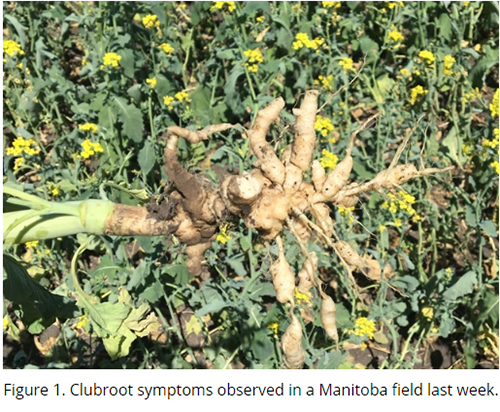
Canola plants showing clubroot symptoms were observed last week (Figure 1). The affected plants are located along a waterway in the field and the affected area covers at least 7 acres. The field, while a new clubroot case, is located in a rural municipality where clubroot symptoms have been previously observed. This finding will not change the Manitoba Clubroot Distribution Map. Best management practices for fields where clubroot is suspected or fields at higher risk (in RMs where clubroot has been detected) include a 3- or 4-year rotation, growing clubroot resistant varieties, and practicing good sanitation (knocking off soil, completing field work on affected fields last). Early detection is important for clubroot management, so be vigilant about scouting areas where plants are less vigorous and consider having a soil test done for the presence of clubroot DNA.
Click here to see more...