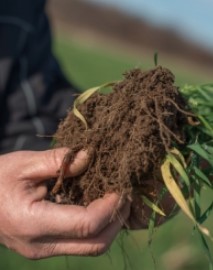
Don’t think dirt is beautiful? You don’t know Deb Gangwish. She has a thing for soil and openly espoused her infatuation recently in an interview on National Public Radio (NPR). And Del Ficke, another Nebraska farmer, understands her crush completely.
Gangwish, who serves on the National Corn Growers Association Freedom to Operate Action Team, is part of a growing legion of farmers at the forefront of a swelling soil health movement. And this movement is turning the historic soil management “evolution” into more of a “revolution” because of the momentum and accelerated change.
“For years, talk of "healthy soil" was mostly limited to organic farmers and others on the fringes of mainstream American agriculture. No more. Articles about soil health fill major farm publications. It's the subject of several recent books. Big food companies are on board, and some of them are discussing a new eco-label for food, alongside "organic" and "fair trade," that would reward farmers for adopting practices that build healthy soil — what many are calling "regenerative agriculture." Dan Charles - NPR
Farmers have been discussing, adopting and tweaking agronomic practices that are better for the soil for decades but more in the context of saving soil from wind and water erosion rather than how to keep soil “healthy.” Keeping soil in the field became a growing priority in the 1990s which spawned many ways to farm under the heading of conservation tillage and no-till.
But today, the quest for healthy soil is saving the soil and a whole lot more. Farmers are developing techniques that capture carbon, cut the need for adding as much fertilizer, and literally build new, more productive soil.
Efforts are being aided by the Soil Health Partnership and NCGA. SHP is leading and facilitating efforts to identify, test and measure management practices to improve soil health to assist in assessing the economic and environmental benefits to farmers’ operations.
Source: NCGA