By Linda Weiford
Washington’s wine industry let out a collective sigh of relief this week as a stiff shot of cold weather gave way to much milder temperatures – just in time for the winter solstice.

Growers were on alert as 48,000 bearing acres of wine grapes east of the Cascade Mountains endured several overnight temperatures near zero. That compares to the historical low average for this time of year of 24 degrees.
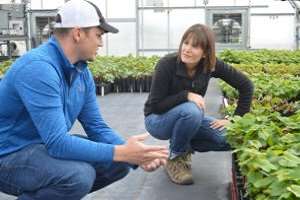
“I’m happy to say that no cold injuries or damage to grapevines were reported as a result of colder than normal temperatures,” said Washington State University extension viticulturist Michelle Moyer, who advises the state’s commercial growers from Bainbridge Island to Walla Walla.
“By the time temperatures dropped, the vines had already reached their maximum cold hardiness,” she explained. By mid-December, most varieties planted in eastern Washington can withstand temperatures of at least minus 8 degrees, she said.
Though the wind chill plunged as low as minus 9 in some areas, grapevines are only impacted by ambient air temperature, she said. Another plus was the snow, which helped insulate the soil.
Most commercial growers typically begin winterizing vineyards in late summer, another factor that contributed to the grapevines’ survival. But even more important is that temperatures dropped little by little instead of rapidly, explained Moyer.
“A quick drop in temperature is the biggest cold-related threat to vines,” she said. “Fortunately, the drop we experienced came on gradually.”
Closely monitoring the downswing was Kevin Corliss, vice president of vineyard operations for Ste. Michelle Wine Estates, which uses nearly two-thirds of wine grapes grown in Washington – the biggest players are cabernet sauvignon, merlot, chardonnay and Riesling.
“To say I kept an eye on the temperature would be an understatement,” said Corliss, who frequently checked WSU’s Grapevine Cold Hardiness website while on a trip to Mexico. The site enabled Corliss and other growers to monitor temperatures in their vineyards and to follow, in real time, how their grapevines might react.
“I’m pleased to say that all of our vineyards pulled through just fine,” he said. “I’m also happy to see that the weather is much warmer now.”
A bright side to the shortest day of year is that both the high and low temperatures in the region climbed by about 25 degrees since last weekend.
Source: wsu.edu