By Richard Jauron
Spring is the best time to plant rhubarb in Iowa. It's also the perfect time to harvest the leaf stalk for pies, tarts sauces, jams, jellies, puddings and punch. Although categorized as a vegetable, rhubarb is used as a fruit. ISU Extension and Outreach horticulturists answer gardener questions about caring for and harvesting rhubarb. To have additional questions answered, contact the ISU Hortline at 515-294-3108 or hortline@iastate.edu.
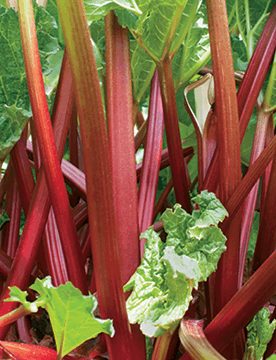
What is the correct way to harvest rhubarb?
Harvest rhubarb when the stalks are 10 to 15 inches long. Grasp the stalk near its base and pull up and slightly to one side. Rhubarb can also be harvested by cutting off the stalks at the soil surface with a sharp knife. Immediately after harvesting the rhubarb, remove the leaf blades from the stalks with a sharp knife. Discard the foliage. The stalks can be placed in a plastic bag and stored in the refrigerator for two to four weeks.
When harvesting rhubarb, do not remove more than one-half of the fully developed stalks from any plant at any one time.
Is it safe to eat rhubarb after the plants have been exposed to freezing temperatures?
There is a fairly common perception that rhubarb is not safe to eat after the plants have been exposed to freezing temperatures. Rhubarb is a tough plant. It tolerates cold temperatures quite well. Temperatures in the upper twenties or low thirties typically cause no damage. Temperatures in the low twenties or teens may damage the plants. Rhubarb damaged by freezing temperatures will have black, shriveled leaves and soft, limp leaf stalks. It’s safe to harvest rhubarb if the plants show no signs of damage two or three days after the freeze event. Damaged rhubarb (blackened foliage and limp stalks) should be pulled and discarded. New stalks that emerge after the freeze are safe to harvest.
My rhubarb plants are flowering. What should I do?
The flower stalks should be promptly pulled and discarded. Plant vigor and next year’s production will be reduced if the plants are allowed to flower and set seed.
Flower formation may have been induced by stressful growing conditions, such as drought, extreme heat, or infertile soils. Age may also be a factor. Older plants tend to flower more than younger ones. Flower formation can be discouraged by following good cultural practices. Sprinkle ½ cup of an all-purpose garden fertilizer, such as 10-10-10, around each plant in early spring. Stop harvesting rhubarb in mid-June. Water rhubarb plants once a week during prolonged dry periods. Dig and divide large, old rhubarb plants in early spring or late summer.
When should I stop harvesting rhubarb?
Gardeners should stop harvesting well-established, vigorous rhubarb plants in mid-June in Iowa. Continued harvest through the summer months weakens the rhubarb plants and reduces the yield and quality of next year’s crop.
Source:iastate.edu