Winter slows down many garden pest problems, but it's also a key time for gardeners to take actions to prevent certain pest problems that occur in the spring. One of the most important of these preventive practices is application of dormant treatments for peach leaf curl.
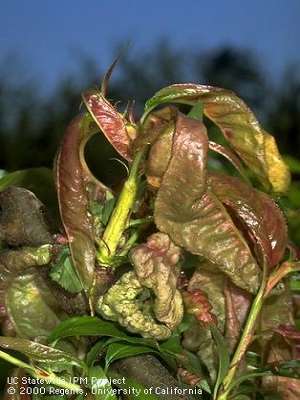
Caused by the fungus Taphrina deformans, peach leaf curl is a very serious disease, which affects only peach and nectarine trees. Its most distinctive symptom is distortion, thickening, and reddening of foliage as trees leaf out in the spring. Damaged leaves often die and fall off trees but will be replaced with new, usually healthy leaves once the weather turns dry and warmer. A leaf curl infection that continues untreated over several years will contribute to a tree's decline and reduce fruit production.
To prevent peach leaf curl, peach and nectarine trees must be treated with preventive fungicides during the dormant season. The best time is after leaves have fallen, usually in late November or December, but in wet climates or during a wet winter, a pesticide application can be made in late winter (February) just before or as buds swell.
Although gardeners won't notice the symptoms until spring, there is little that they can do at that time to reduce leaf curl. Treatment applied after trees leaf out or after symptoms appear won't be effective. Removing affected leaves or shoots will not reduce the problem. There are a few peach varieties that are resistant or partially resistant to leaf curl. These are Frost, Indian Free, Muir, and Q-1-8.
Dormant Treatment Materials
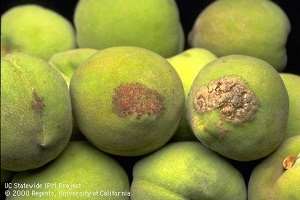
Products containing a copper ammonium complex (Liqui-Cop or Kop R Spray) are available but are typically only 8% copper and significantly less effective than previously available, but now discontinued copper-based products. Current copper fungicides can be made more effective by applying it with 1% oil in the solution.
The fungicide chlorothalonil is effective, and several trade named products are available (Daconil, Fung-onil, Ortho Garden Disease Control, etc.). However, care must be taken in handling chlorothalonil, since this active ingredient is listed as a likely carcinogen and can also cause severe eye or skin irritation if applied improperly or if proper protective clothing and equipment aren't worn.
Bordeaux mixture, which gardeners can mix up themselves by following the directions in the UC IPM publication Pest Note: Bordeaux Mixture, is also effective, but finding the ingredients and mixing up Bordeaux is more work than some gardeners may be willing to do. For gardeners wishing to take the extra time to make Bordeaux mixture, the primary ingredients are powdered copper sulfate in “bluestone” form and either hydrated lime (calcium hydroxide), such as used in making plaster, or quick lime (calcium oxide). Neither of these latter ingredients is a registered pesticide. Copper sulfate can only be found in large bags, so unused product will remain viable for years when kept in the garage or shed. Be sure to wear goggles, gloves, and a dust and mist-filtering respirator when working with hydrated lime and mixing up the solution.
Source: ucanr.edu