By Frank M. Watson
Rainfall from Hurricane Matthew has left soil in coastal south Georgia completely saturated. Rainy conditions like these wreak havoc on gardeners and farmers who need to do yard or field work. In many cases, the best way to deal with the situation is to wait for drier conditions.
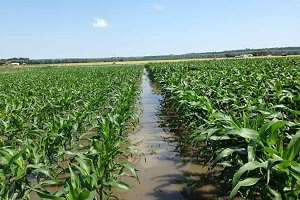
Attempting to work the soil when it is too wet can result in soil structural issues that can take years to resolve. As a UGA Cooperative Extension county agent, I have seen firsthand some of the messes created by fields being plowed when the soil is too wet. Even small amounts of red clay can become big clods of soil that will torment growers for years.
Remember not to drive off of hard-packed or paved roads during these conditions either. Someone driving, or trying to drive, across a waterlogged lawn will ruin it. If this mistake is made and a car gets stuck, the driver should immediately stop and call for help. Attempting to drive out by going backward and forward only creates ruts that will take a lot of effort to repair. To remove the stuck vehicle, have another vehicle on hard ground pull the vehicle out to avoid additional damage to the lawn.
Finally, don’t pull off onto the side of the road anywhere unless there is an emergency situation. If you do, you will most likely be walking to get help. Many newer cars have traction control, but older cars without traction control can be removed with the help of the emergency brake.
Don’t apply the brake so tight that the back wheels can’t turn; instead, apply just enough resistance to equalize the torque across the differential, causing both tires to turn. Often this additional traction will be just enough to get the vehicle back on solid ground.
Source: uga.edu