Farms.com Home   News

Seed Rate: Start At 5 Lb./Ac. And Tweak From There


For growers who want to keep things simple, a standard seeding rate of 5 lb./ac. should meet the basic needs of stand establishment — as long as all other steps for a good stand are followed.
 
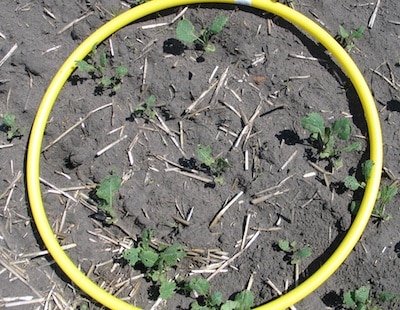
Growers who want a seeding rate that establishes 7 to 10 plants per square foot — 5 plants is about the minimum but you should add a few extra plants for a safety cushion — will want to adjust the seeding rate based on seeding date (cool soils may require a higher seeding rate given the likelihood of higher seeding mortality) and thousand seed weight. Read how to do that.
 
If growers have budgeted on a fixed seeding rate in lb./ac., consider seeding heavier in cold soils, trashy conditions or other poor seedbed fields and using lower seeding rates on fields with excellent emergence expectations.
 
Source: Alberta Canola Producers Commission

Trending Video

Evolution of Beef Cattle Farming

Video: Evolution of Beef Cattle Farming

The Clear Conversations podcast took to the road for a special episode recorded in Nashville during CattleCon, bringing listeners straight into the heart of the cattle industry. Host Tracy Sellers welcomed rancher Steve Wooten of Beatty Canyon Ranch in Colorado for a wide-ranging discussion that blended family history and sustainability, particularly as it relates to the future of beef production.

Sustainability emerged as a central theme of the conversation, a word that Wooten acknowledges can mean very different things depending on who you ask. For him, sustainability starts with the soil. Healthy soil produces healthy grass, which supports efficient cattle capable of producing year after year with minimal external inputs. It’s an approach that equally considers vegetation, animal efficiency, and long-term profitability.

That philosophy aligned naturally with Wooten’s involvement in the U.S. Roundtable for Sustainable Beef, where he served as a representative for the Colorado Cattlemen’s Association. The roundtable brings together the entire beef supply chain—from producers to retailers—along with universities, NGOs, and allied industries. Its goal is not regulation, Wooten emphasized, but collaboration, shared learning, and continuous improvement.