By Olivia Henry
Extreme drought is changing agriculture across California — and urban farming is no exception.
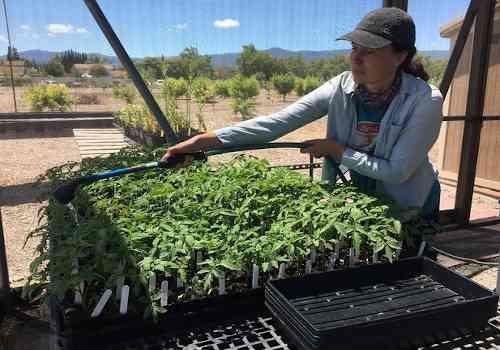
The cost of water may deter people from growing food in urban areas, says Lucy Diekmann, UC Cooperative Extension urban agriculture and food systems advisor in Santa Clara County.
Many community farms and gardens cultivate land owned by city or county departments, schools and private landowners. Lucy Diekmann, a UC Cooperative Extension urban agriculture and food systems advisor in Santa Clara County, says that how those institutions handle rationing or surcharges set by water retailers makes all the difference for urban farmers. Diekmann co-authored a 2017 study looking at how urban agriculture in Silicon Valley was affected by the last period of extreme drought.
For example, priced-based water conservation strategies had very different outcomes depending on the landowner. Diekmann and her co-authors learned that three-quarters of Santa Clara County's community farms had their water bill paid by a project sponsor such as a nonprofit or school, and the sponsor absorbed the increased costs. On the other hand, one city-run community garden raised fees by 27% in one year to discourage water use. Some gardeners either left, dropped off the waitlist or chose smaller plots.
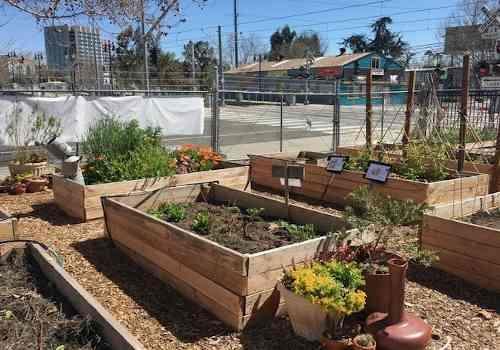
Valley Verde urban farm in downtown San Jose. Three-quarters of Santa Clara County’s community farms had their water bill paid by a sponsor, Diekmann found in 2017.
Diekmann and her co-authors point out that a major challenge for water management in urban agriculture is the lack of data. Many community farms and gardens don't have their own meters.
"We recommend that cities and counties subsidize the cost of meters, give financial support for installing watering systems that support conservation, and offer irrigation training," Diekmann said.
Because the water landscape is so uneven for urban farmers — usually in ways that benefit well-resourced groups — Diekmann and her co-authors also write that “affordable, consistent water prices for all UA (urban agriculture) users” must be part of all cities' urban agriculture policy portfolios.
Source : ucanr.edu