Irrigated crop production has the advantage of fertigation as an option in nitrogen management. Fertigation is the process of applying fertilizer through irrigation water. Liquid 28% nitrogen is the most common product for applied through irrigation. Fertigation must be applied only when using the proper equipment.
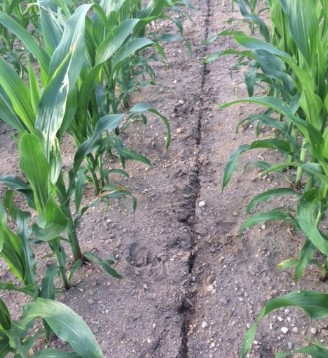
Small amount of irrigation can reduce nitrogen loss due to volatilization.
Fertigation allows producers to evaluate nitrogen loss due to wet conditions or heavy rains, crop condition and the current market situation and adjust their nitrogen plan accordingly to meet crop needs and maximize profitability. The closer the nitrogen fertilizer is applied to the time of peak crop need, the lower the potential for nitrogen loss and the greater the return on your nitrogen investment.
Even if you never fertigate, irrigation still provides the opportunity to water in surface applied or knifed in nitrogen applications. Incorporation by irrigation reduces nitrogen loss to volatilization, increasing the amount of nitrogen available to the crop. In some situations, UAN is dribbled between rows in wet fields and if rain is not in the forecast, a small irrigation application can be used to reduce the volatilization loss to the air. This technique uses simple, readily available equipment and can cover acres very quickly. In dire situations, dry forms of nitrogen (ammonium sulfate or urea) can be applied by air and a small irrigation application can be used to incorporate it if timely rains do not occur.
The inherent risk of injecting fertilizer into a water system dictates the requirement for backflow protection. Both Indiana and Michigan have resource protection rules that require using chemigation valves for the protection of both surface and ground water sources. A chemigation valve creates an air gap downstream from the pump when the pump is shut down. The air gap breaks the suction created by returning water and prevents contaminants from entering surface or ground water. Chemigation valves, for most irrigation, are available from local irrigation dealers for less than $700. Installation cost is much less at the time of pump construction and should be included in almost all new installations.
Source: msu.edu