By Ashley Dean and Erin Hodgson
This week, the first soybean gall midge adults (Photo 1) were collected in Iowa near Wall Lake in Sac County (Monday) and near Sutherland in O’Brien County (Thursday). This is similar to when soybean gall midge emergence was first detected in Iowa in 2021. The first Midwest report of soybean gall midge emergence in 2022 was on June 7 near Davey, Nebraska. You can keep up with soybean gall midge emergence at soybeangallmidge.org/. We will also send text updates on soybean gall midge activity in Iowa through the Iowa Pest Alert Network this summer.
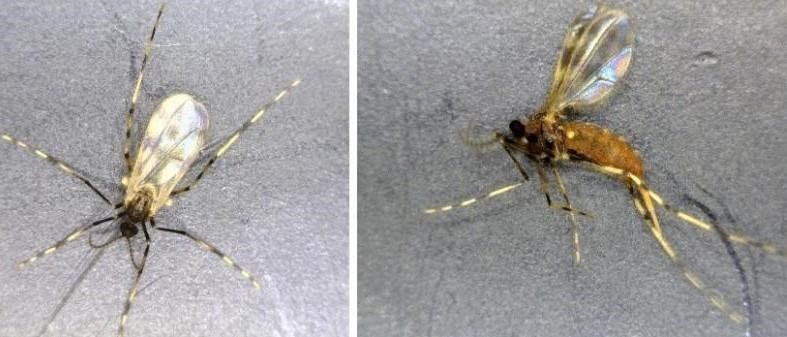 Photo 1. Soybean gall midge adults. It is unlikely you will see soybean gall midge adults in the field unless emergence cages are used. Photos by Justin McMechan, University of Nebraska-Lincoln.
Typically, plant injury is noticeable and larvae can be found feeding within stems a few weeks after adult emergence. Begin scouting for soybean gall midge larvae now, especially if plants are at least V2. Start scouting at the edge of soybean fields adjacent to fields that were infested last year or, if infestations were not noted last year, begin at the field edge near last year’s soybean. A black lesion is usually noticeable at the base of the plant (Photo 2). Look for white or orange larvae feeding inside soybean stems (Photo 3) by using your fingernail or a knife to split the stem. Early in the season, infestations might be noticeable if random plants are dead or wilting among otherwise healthy-looking plants (Photo 4). This becomes less obvious later in the season as the canopy closes.
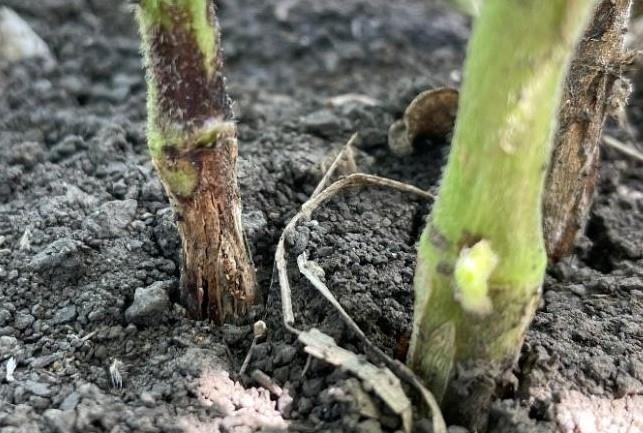 Photo 2. A black lesion at the base of a plant likely indicates there are soybean gall midge larvae inside. Peel back the epidermis to expose larvae. (Photo by Ashley Dean.)
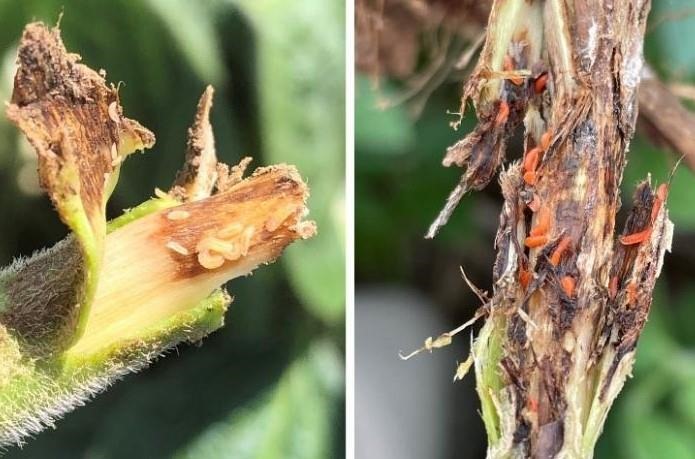 Photo 3. White (1st or 2nd instar) or orange (3rd instar) larvae can be found by peeling back the layers of the stem or splitting the stem. (Photos by Ashley Dean.)
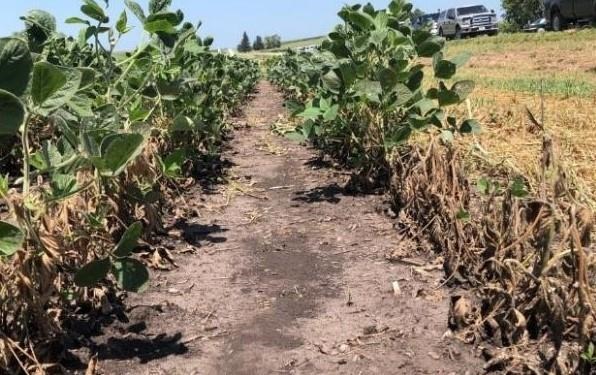 Photo 4. Dead, wilted plants can be found amongst healthy-looking plants. Infestations tend to begin at the field edge. (Photo by Ashley Dean.)
Unfortunately, there are no known, effective management strategies to suppress larvae at this time. This summer, universities around the Midwest continue to monitor the distribution and evaluate potential management strategies. Read more about soybean gall midge identification, biology, and scouting in this encyclopedia article.
Source : iastate.edu