By Simon Mahan
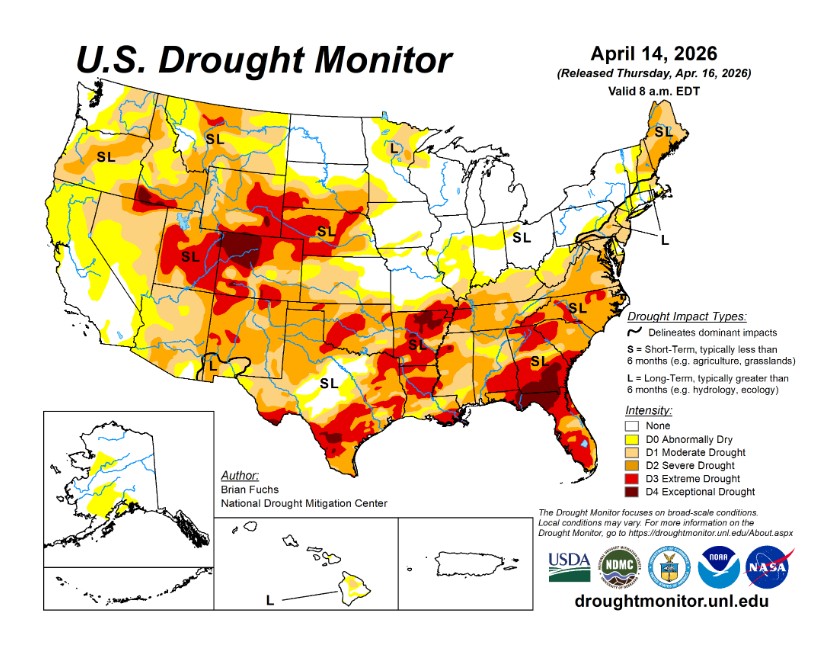
Wind and solar farms do not use water to generate electricity. Unlike coal, nuclear, and some natural gas power plants, wind power and solar power do not need to be located near lakes, rivers and streams for a water supply. With much of the Southeast in drought conditions, wind and solar are saving millions of gallons of water, which can then be used for agriculture or other purposes.
What Power Plants Use Water and Why
The Energy Information Administration (EIA) wrote that in 2021, some 47.7 trillion gallons of water was withdrawn for power plant electric generation across the United States. Based on that data, coal-fired power plants used about 22,690 gallons of water for every megawatt-hour of electricity generated in 2024, withdrawing 14 trillion gallons overall. Or, to think about it another way, that’s about 21 million Olympic-sized swimming pools full of water.
Natural gas units used about 10 trillion gallons of water. Nuclear reactors used about 25,176 gallons per MWh, and withdrew a total of almost 20 trillion gallons of water. Cooling water ponds or lakes, particularly those used for nuclear reactors, can use up tens of thousands of acres of land.
Click here to see more...