By Josh Maples
The weekly number of cattle processed has been stronger than previous levels for most of 2021. Slaughter on Saturdays has been an important driver of this increase.
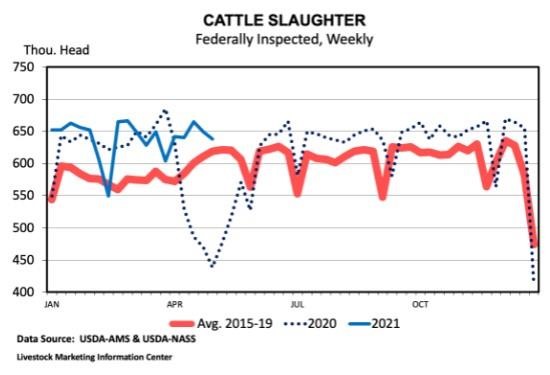
As shown in the chart above, the weekly number of cattle slaughtered has been near or above year-ago levels for most weeks in 2021. The impacts from the winter storm in February can clearly be seen in the blue line. It is also easy to see in the dotted line the sharp drop in processing last year due to the pandemic. The number of cattle slaughtered last week was 45 percent higher than a year ago – but that was driven by the low number last year instead of an exceptionally high number this year.
Given the disruption in 2020, it is useful to compare weekly slaughter totals to the five-year average for 2015-2019 which is shown using the red lines in the charts. As shown, cattle slaughter has been above the five-year average for most of 2021 and most of 2020 except for the major disruption period during the spring of 2020. A primary reason is the larger supplies of fed cattle in recent years. Fed cattle supplies are influenced by the cattle cycle. USDA estimates the calf crop peaked in 2018 followed by small declines in recent years. The processing disruption in 2020 also delayed many fed cattle from being processed and slowed cattle growth elsewhere in the supply chain. All of these factors contribute to currently large supplies of fed cattle that need to be processed during 2021.
Saturday processing has been key to the increased processing totals. As shown in the chart below, the number of cattle slaughtered on Saturdays has been above previous levels for most of the year and this increase accounts for most of the weekly increase in cattle slaughter. In 2021, an average of 59,000 more cattle have been slaughtered each week than during the same weeks of the five-year average from 2015-2019. Increased slaughter on Saturdays accounts for about 35,000 of this increase.
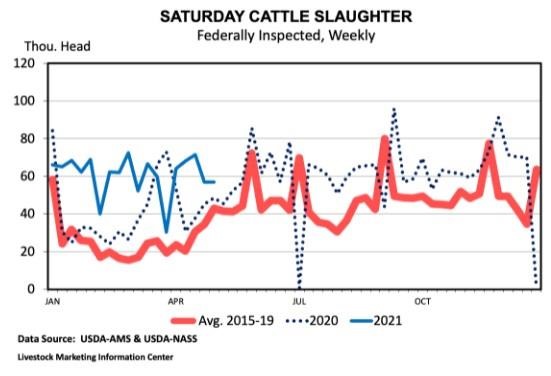
The supply of fed cattle available and high boxed beef cutout values continue to incentivize increased processing, even on Saturdays which may be more costly or more difficult to find labor. This could change later in the year or into 2022 as fed cattle supplies are expected to moderate. As James mentioned a few weeks ago, the supply of fed cattle is expected to decline as we move through 2021 and into 2022.
Source : osu.edu